Product Requirements Document Template for an MVP
Short answer
A product requirements document describes which problem the software solves, for whom, and how you will know it is finished, without prescribing how to build it. For an MVP, five to ten pages are enough: goal, user roles, user stories with acceptance criteria, non-functional requirements, integrations, scope boundaries, constraints and an acceptance process.
Hand two developers the sentence “users can book appointments” and ask for an estimate. One quotes 20 hours for a form with a date picker. The other quotes 150, because she is already thinking about time zones, double bookings, cancellation windows and recurring slots. Both read the sentence correctly. The sentence is the problem.
The product requirements document, or PRD, exists to get rid of sentences like that before anyone starts billing. It takes a founder two or three focused days. Skipping it costs you every misunderstanding at the full hourly rate.
What a PRD is for, and what it is not
The PRD describes the what and the why. Who has which problem, what the software must let them do, and how you will check that it works. It deliberately leaves the how to the people building it. “The database must be PostgreSQL” only belongs in a PRD if there is a real reason, such as an existing system your team already runs.
There is a formal body of practice behind this. The international standard ISO/IEC/IEEE 29148 covers requirements engineering in depth. You do not need to follow it to the letter for an MVP, but its core idea carries over: every requirement should be necessary, unambiguous and verifiable.
The nine sections
- BackgroundWho has the problem, with numbers or quotes from customer interviews.
- GoalWhat should be measurably different after launch, in one sentence.
- User rolesWho uses the system and with which permissions.
- User storiesWhat each role must be able to do, each with acceptance criteria.
- Non-functional requirementsPrivacy, devices and browsers, speed, accessibility.
- IntegrationsPayments, email, existing tools, data imports.
- Out of scopeWhat is explicitly not part of the MVP.
- ConstraintsBudget, dates, hosting, contacts, who owns code and accounts.
- AcceptanceHow, where and by whom the delivered work is tested.
Founders often skip the background section because it reads like prose. It is the reason good developers make better suggestions. An engineer who knows that small clinics mostly suffer from last-minute cancellations will propose a waiting list unprompted. Your quotes for this section come straight from your customer discovery interviews.
Copy-paste PRD template
# [Product name] – MVP requirements, version 0.1

1. Background
   Problem, affected group, evidence (interview count, quotes, numbers).

2. Goal
   One sentence. Example: "Clinics fill 50% of cancelled slots within 24 hours."

3. User roles
   Role | What they do | Permissions

4. User stories (priority: must / should / later)
   As a [role], I want to [action], so that [benefit].
   Acceptance criteria:
   - Given ..., when ..., then ...

5. Non-functional requirements
   Data location, privacy, supported browsers/devices, load times, accessibility.

6. Integrations
   Payment provider, email service, calendar, imports.

7. Out of scope for the MVP
   Explicit list.

8. Constraints
   Budget cap, milestones, hosting, repository and account ownership.

9. Acceptance
   Test environment, who signs off, how defects are classified.
Writing user stories that can be estimated
Stories follow a simple form: “As a [role], I want to [action], so that [benefit].” The benefit is the part people drop, and it is the most useful. It lets a developer suggest a cheaper solution that serves the same purpose.
Every story needs acceptance criteria, testable conditions that define done. The Given/When/Then pattern keeps them concrete:
- Story: As a freelance designer, I want overdue invoices to trigger reminder emails, so that I stop chasing clients by hand.
- Given an invoice is 7 days past due, when the daily job runs, then the client receives reminder one with the invoice attached.
- Given reminder one was sent 7 days ago and the invoice is still unpaid, when the job runs, then reminder two goes out with a firmer template.
- Given the invoice is marked paid, then no further reminders are sent, even if a job was already scheduled.
Four lines, and “send reminders” has become something two developers will estimate within shouting distance of each other. Notice what the criteria leave out: the email wording, the colours, the sending provider. Those are implementation details for the team. Sort stories into must, should and later. Everything in “later” moves to the out-of-scope section.
Non-functional requirements people forget
These describe qualities rather than features. They are the most commonly forgotten and the most expensive to retrofit.
Privacy comes first. If you have EU or UK users, write down where data may be stored, for example “EU data centres only”, and whether any special category data such as health information is involved, because that tightens hosting and access rules considerably.
Devices and browsers next. “Works on current versions of Chrome, Firefox, Safari and Edge, and on phones from 360 pixels wide” is testable. “Responsive” is not.
Accessibility is no longer optional for many consumer-facing services in Europe. The European Accessibility Act has applied since 28 June 2025, including to e-commerce services. Microenterprises providing services are exempt, but check whether that covers you, and for how long, before you build.
Fixed price or time and materials?
How binding the PRD becomes depends on the contract. Under a fixed-price contract, the supplier owes a finished result and prices the risk in. The PRD becomes the yardstick for everything, and every gap turns into a change request.
Under time and materials, you pay for hours. That suits an MVP whose scope will shift after the first tests, but it needs you closely involved. Many projects combine both: a fixed price for a tightly defined first milestone, then hourly billing with a monthly cap. Write the chosen model into the constraints section, and have a lawyer look at the contract itself.
Who should write it
You should. Not the agency, and not a consultant you pay to produce it. Writing the PRD forces decisions that will otherwise be made mid-project, under time pressure, at your expense. Delegating it means someone else makes those decisions for you, usually in the direction of more scope.
Get help reviewing it, though. An experienced developer who spends an hour reading your draft will spot the places where effort hides: the innocent-looking “users can export their data”, the integration that has no public API, the admin screen nobody thought about. If you have a technical co-founder, they should co-write it rather than approve it at the end.
Keep the document alive. Version it, date it, and log every change after suppliers have quoted. When the project ends, an up-to-date PRD doubles as onboarding material for the next developer.
From PRD to quotes
Send the PRD to two or three suppliers and ask for hours per user story. Large gaps on a single story nearly always point to an ambiguity in your text, which is cheap to fix now. Compare the totals with the ranges in our breakdown of MVP development cost.
If you already run a no-code MVP, you have a head start: annotated screenshots of the working version replace pages of description. For teams like OnlineBuilders and most experienced studios, a clear PRD is what makes a reliable estimate possible. Vague ones produce risk premiums or change requests.
Next step: take the template, write one user story with at least three acceptance criteria for each of your three most important features, and give it to someone who does not know the project. Every question they ask marks a gap.
Questions people ask
What is the difference between a PRD and a technical spec?
The PRD says what the product must do and why, from the customer's and business's point of view. A technical specification, written by the engineers, says how they will build it: architecture, data model, services. Founders write the first, developers the second.
How long should a PRD for an MVP be?
Usually five to ten pages. Integrations with other systems or regulatory requirements make it longer. A sixty-page PRD for an MVP is a sign the product is too big, not that the document is thorough.
Do agile teams still need a PRD?
Yes, in a lighter form. Agile teams still need a goal, user roles and a prioritised set of stories. The PRD becomes the seed of the backlog rather than a frozen contract appendix.
Should designs go into the PRD?
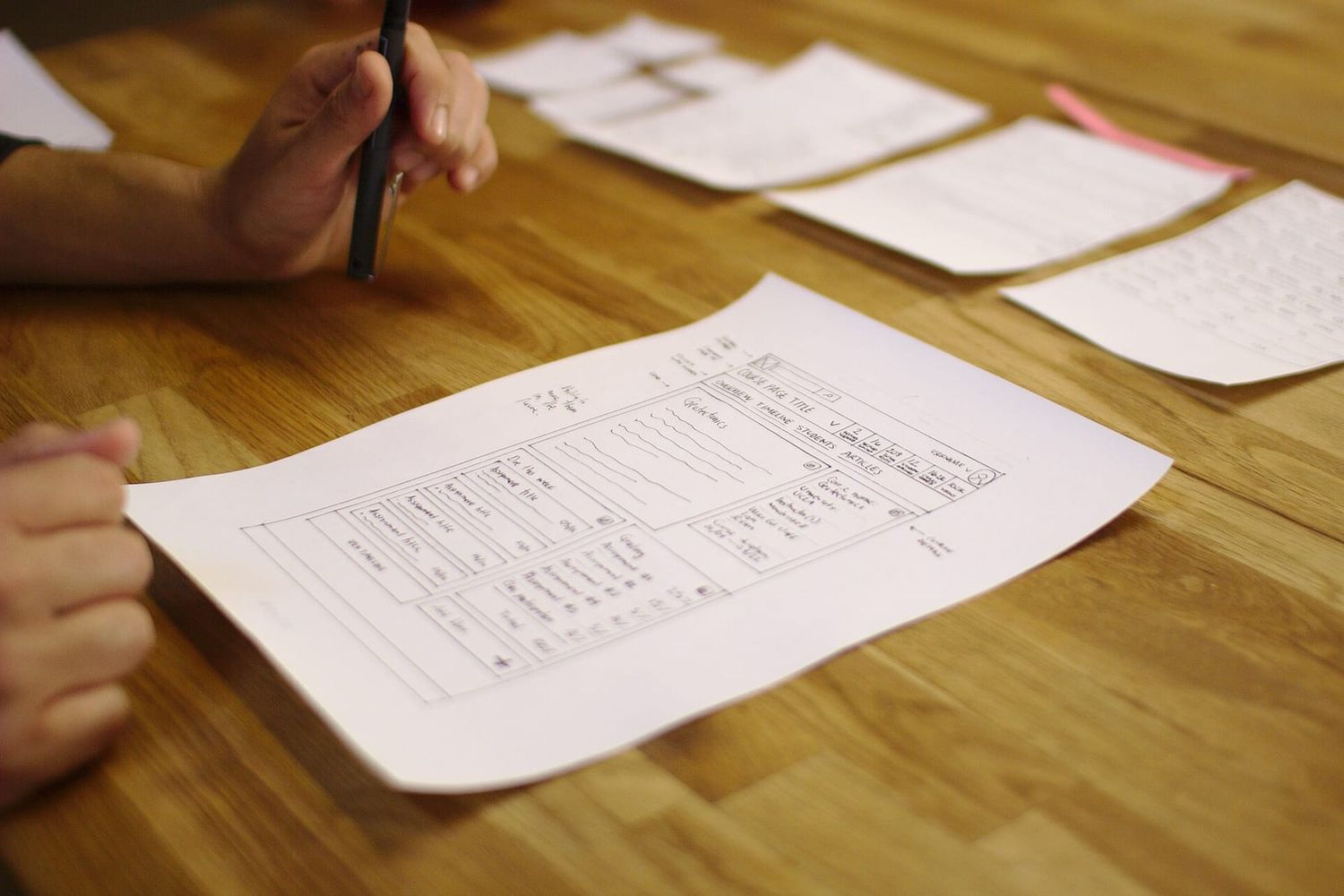
Sketches or a clickable mock-up help a lot because they expose misunderstandings early. Final visual design does not belong in it; that gets created during the project.